Friday, December 03, 2021

Setting up Proxmox on a Poweredge R720 rack server

After getting a Poweredge R320 rack server, I kind of realised its limitations, and was hunting around for something else. Like the T420 tower server. But I kept losing to others at the online auction... but managed to land myself with another rack server. The Poweredge R720.
 
The biggest surprise when it arrived was the weight. The deliveryman didn't help to bring it in, handing it over to me at the door. And I found out why. It was a big flat box that weighed 20kg. It was a struggle to bring the box inside, given my lack of strength. Another struggle to get the rack server out of the box. Compared to the R720, the R320 was so much lighter.

I actually didn't know what I was getting, other than that it is a R720. That was all the listing said, plus some photos which don't say much. So I was kind of surprised at what it actually came with when I finally opened it up. From the photos, I knew it had a DVD drive and eight 3.5 inch bays, and the two CPU sinks implied that it had dual processors. But it actually came with dual E5-2640 processors (6 threads 12 cores each, for a total of 12 cores 24 threads) and 64 GB of RAM. Plus two 1100 W power supplies in redundancy mode, and a H710 Mini RAID controller. In addition to four full-length PCI-E slots, it also came with the optional three half-length slots. That's a total of seven PCI-E slots, although only one is a 16-lane slot, while the rest are 8 lanes. Still, not bad for 20,000 yen.
 
I had separately bought 64 GB of RAM for the R320, so I transferred that over for a total of 128 GB RAM. I am also going to swap out the processors with E5-2670v2 (10 cores 20 threads each, for a total of 20 cores 40 threads) which should be more than enough to run several virtual machines on it at the same time. I also took out the SSD and HDD that I added to the R320, which will be in storage for a while until I figure out what to do with it. (Sell? Use?) Plus I managed to get a GTX 1050Ti and a Quadro P400 (both used) for a reasonable price.

I had previously printed out adapters to mount 2.5 inch drives in 3.5 inch bays. But some of the 3.5 inch caddies of the R720 came with adapters already, which I conveniently used.

I installed the following in the R720:
2 x 500 GB SSDs for Proxmox and virtual machines
1 x 2 TB 2.5 inch HDD as additional slow storage for the virtual machines and other computers in the house to share
3 x 6 TB 3.5 inch HDD in RAIDZ configuration as NAS storage

I am using Proxmox as the hypervisor, under which I installed a TrueNAS virtual machine to handle the NAS storage (handling the 3 x 6 TB HDDs in RAIDZ). The 2 TB HDD is actually mounted as a Samba share under Proxmox so that I can share it even if the TrueNAS virtual machine is not running. I also have another Ubuntu virtual machine running a Jellyfin media server. All my media files are now in NAS and served by the Jellyfin server. The Quadro P400 is passed through to the Jellyfin server to help with hardware accelerated transcoding.

I also installed a Ubuntu MATE virtual machine, and a Windows 11 virtual machine. These are more for generic use. Or rather, the Ubuntu MATE one is for generic use. The Windows 11 one is for me to trying gaming with a virtual machine. I passed through the GTX 1050Ti and it gave reasonable performance in performance mode in Fortnite, accessed through NoMachine.

I was actually kind of surprised that the GTX 1050Ti came in such a good condition, since it was a used item bought on Yahoo! Auction at a really reasonable price (give the prices of GPU cards now). Even had the original box, manual, driver CD. Very unlike the Quadro P400 which basically came in an anti-static bag wrapped with bubble-wrap.

I also run a Python 2 script that will update the IP address of my domain names. This used to run on another computer in the house, but since the Proxmox hypervisor is likely to be operating all the time, I shifted that script to run under Proxmox at a regular interval using crontab.

I had some issues getting the Ubuntu virtual machine to use the Quadro P400 as its graphics card for virtual desktops, which I eventually managed to solve and will write about the details in another post.
 
Some technical stuff on setting up Proxmox and the virtual machines.
 
To get a coloured prompt in the terminal console, I used
cp /etc/skel/.bashrc /root/.bashrc
and then edited "/root/.bashrc" to uncomment the line
#force_color_prompt=yes
to
force_color_prompt=yes
There is a need to run
source /root/.bashrc
after that to effect the changes immediately.
 
To add a new drive, I followed this guide to extend the first SSD (/dev/sda) with another SSD (/dev/sdb). This gives me around 1 TB of space for Proxmox itself (which uses a partition of 100 GB) and virtual machines (in a thin logical volume pool called "data"). This will come in handy next time when I want to add more virtual machines, or just create addition storage to assign to existing virtual machines.

First, partition the new SSD by
cfdisk /dev/sdb
I chose "gpt", then gave it all the space to the "New" partition, "Write" to write the partition table, then "Quit" to get out of the program. In Proxmox, under "Disks", the new SSD should show with its partition (/dev/sdb and /dev/sdb1).
 
Then, create the physical volume by
pvcreate /dev/sdb1

Then, extend the existing "pve" logical volume group by
vgextend pve /dev/sdb1

Next, I used
pvs
to see how much space on the new SSD there is to assign. For me, it was 465.76 GB, so I extended the "data" thinpool in "pve" by
lvextend /dev/pve/data -L +465.76g
(Note: the "g" at the end is very important... if you miss it, it will extend by MB and not GB.)

This should extend the existing thinpool, which concludes the process.
 
Update March 19, 2022: I didn't really time it with a stopwatch, but it took about 4 minutes for the server to boot into Proxmox. Given that this server is probably 10 years old, the bootup process... is slow. Once Proxmox is booted up, the 3 VMs that I launch on boot will take another 4 to 5 minutes to fully boot up. First is the TrueNAS server since it has all the shared drives. Next is the service server that runs DNS and such. Finally is the media server which basically runs Jellyfin. So the total reboot time is actually more like 8 to 9 minutes. This is compared to less than 2 minutes for the R430 to boot up into Proxmox (no VMs started on boot, though). 

Update March 31, 2022: Here is a collection of scripts that help with Proxmox after installation.

Wednesday, December 01, 2021

Translating a letter

It has been a while since I translated a letter. Not the business letter about changes in terms and conditions or notifications, but a more informal and personal type. Well, it is still business-related, from one CEO to another CEO about his retirement, but on a more informal level. It made me feel a bit like Violet Evergarden, having to pick out what the writer is trying to say, and conveying its equivalent in English. Yes, it is easy to just translate everything literally. But some expressions in Japanese cannot be properly translated in such a direct manner. An expression that is acceptable between Japanese people may not be culturally appropriate outside Japan.

For example, "Thank you for your hard work over the years" may be fine in Japan, but given the relationship between the two companies this time, and the cultural difference, it may be taken with a condescending nuance and should thus be avoided. It is the small things like these that makes letter translation so challenging and fulfilling.

Saturday, November 27, 2021

Activating Windows 11 virtual machine

I was able to install Windows 11 as a virtual machine under Proxmox in the rack server, and even found a way to activate it. Then, I saw on CNX Software that there is a sale for Windows activation keys due to Black Friday, and decided to give it a try.

The sale was on Godeal24 and I was wondering if the keys are legit. But they are real cheap anyway, so I thought I would just give it a try. I don't really use Windows anyway, and I kind of treated this like a learning experience. The site allows you to buy as a guest without registration, and you can even pay via PayPal instead of credit card.

Long story short. The key can activate Windows 11. But it is an OEM_DM channel key, not a full retail key. Which, for my case, is fine since I am not using Windows for anything critical. (In fact, I don't even use it much at all, except to run it and smile to myself, "I managed to install a Windows 11 virtual machine." 😅) But if you are using it for your main PC, I would recommend against such activation keys, because that is not what they are meant for.

Meanwhile, the rack server learning journey continues...

Update: As an OEM_DM channel key, it cannot be transferred. I tried to deregister the key on one VM to use on another, but it didn't work.

Thursday, November 25, 2021

Replacing extruder motor

I needed to print some feet so that my rack server can be made to stand up, so I was glad I have a 3D printer. Problem is, when printing, I realised I was getting underextrusion in the prints. So I took some time to observe a print as it was taking place, and saw that the extruder motor was not turning sometimes.

At first, I thought the tensioner was too tight, causing the extruder motor to stall. So I loosened the tensioner spring, which allowed the extruder motor to turn, but it was too loose to grip the filament, and I still ended up with underextrusion. So I tried to increase the tension again, enough to grip the filament, but then again, the extruder motor sometimes didn't spin. I even played around with the motor current (thankfully, it was easy, since I am using TMC drivers) but no luck.

In the end, I suspected that it could be the extruder motor which has failed. So, much as I dreaded, I took apart the gantry assembly (I am using a Titan Aero direct drive extruder), found a spare motor, put everything back together, and yes! It is feeding fine now. So I went through the manual leveling process of leveling the corners, then a 25-point manual bed leveling process. I then did my usual first layer test, and it seems everything is working as it should.

The final test was to print a set of feet for the rack server. And wow! I got a nice clean print, which confirmed that it was the extruder motor that had failed. Another new piece of knowledge for troubleshooting underextrusion issues.

Saturday, November 20, 2021

Installing Proxmox on Poweredge R320 and TrueNAS as virtual machine

I recently got myself a used Dell Poweredge R320 rack server. I was thinking of installing Ubuntu Server on it, then running virtual machines on top of that. But after a bit of research, I realised that it is best to have a hypervisor, and run several virtual machines on it. The hypervisor I chose was Proxmox, which can be downloaded and used without having to pay for a subscription.

It is actually quite straightforward to install. Download the ISO image from Proxmox's website, burn it onto a USB thumbdrive, then boot up the rack server using the thumbdrive. I chose to install it onto a 500GB SSD which I had. This will also be the disk that I use to store my virtual machines.

Once Proxmox has been installed, I decided to install TrueNAS to manage the storage disks. This is actually quite straightforward too. Download the ISO from TrueNAS's website, and then upload the ISO onto Proxmox (under the Storage section of the "local" disk). This will then allow you to choose the ISO when creating a virtual machine. I allocated 50GB for TrueNAS. The tricky part was to pass the harddisks to the virtual machine. At first, I tried to pass the entire RAID controller, but this just ended up in a lot of disk corruption since my SSD is also connected to the RAID controller. In the end, I found out that I had to to pass each disk individually. I did this by using the following command, after creating the VM (but not starting it yet):

qm set 100 -virtio1 /dev/disk/by-id/scsi-xxxxxx
 
Here, "100" is for the VM number of TrueNAS, which, if the first VM installed on Proxmox, is usually given the number 100. "scsi-xxxxxx" is whatever the number assigned to the harddisk you want to pass through. You can actually see the list of attached harddisks under the "Disks" tab of the main Proxmox environment. There should be serial numbers listed which conforms to those you find under "/dev/disk/by-id". This allowed me to see my two storage HDD (2TB each) in TrueNAS, which I then used to set up a pool in mirror mode.

To install QEMU guest agent on a TrueNAS VM, follow the instructions here. First, on the "History" tab of the page, there should be a ZIP file to download. After downloading and expanding the ZIP file, copy its contents into the VM. What I did was the TrueNAS VM was already serving a SMB share, so I copied the contents there. After that, it is a matter of using the console to move the files to the right places and executing the required steps in the instructions.
Instructions replicated below.
  1. Make the required files executable by chmod +c qemu-ga and chmod +x qemu-guest-agent .
  2. Place virtio_console.ko in /boot/modules.
  3. Run kldload virtio_console.ko.
  4. Place qemu-ga in /usr/local/bin.
  5. Place qemu-guest-agent in /usr/local/etc/rc.d.
  6. Place qemu-guest-agent in another location of your choice. This will be a copy that is re-added to the rc.d directory each time TrueNAS boots.
  7. Create Tunables in the TrueNAS web UI. System -> Tunables.
    1. Variable=qemu_guest_agent_enable Value=YES Type=RC Enabled=yes
    2. Variable=qemu_guest_agent_flags Value=-d -v -l /var/log/qemu-ga.log Type=RC Enabled=yes
    3. Variable=virtio_console_load Value=YES Type=LOADER Enabled=yes
  8. Create Init/Shutdown Scripts in the TrueNAS web UI. Tasks -> Init/Shutdown Scripts.
    1. Type=Command Command=service qemu-guest-agent start When=POSTINIT Enabled=yes Timeout=10
    2. Type=Command Command=cp /[path to a local copy of qemu-guest-agent file] /usr/local/etc/rc.d When=PREINIT Enabled=yes Timeout=10
  9. Reboot TrueNAS.
Within TrueNAS, I also installed the Plex Media Server plugin. This allows me to stream videos from the storage HDDs. However, without a dedicated GPU, video transcoding uses CPU power, which can cause the fans to rev up and create a bit of noise. And 1U servers are not the quietest of rack servers...
 
Oh, I also managed to install Windows 11 as a virtual machine, but unfortunately, it is not possible to run Windows Subsystem for Linux (WSL) or Windows Subsystem for Android (WSA) inside a Win11 virtual machine. To activate Windows 11, you can follow this guide. I will get myself a proper key if I intend to use Windows 11; this is just a temporary solution for me to test to see if I want to move to Windows 11.

The rack server was originally sitting on top of a low shelf, but I used my Ender-3 to print some feet for it, and now, it is standing upright beside my main work desk.


Now to get myself a tower server... eyeing the T420 next. If I can get my hands on a cheap used one, then I will probably expand it with some RAM and run dual CPUs on it. Plus a couple of 4TB HDDs.

Note: To install Proxmox and run it from a PCIe SSD (or anything connected via PCIe, I guess), follow this guide or this guide.

Wiping clean an entire disk in Linux

Note to self (DANGER: running as root will cause the disk to be wiped as soon as this command is executed, so be very sure the target disk is typed in correctly):
To wipe a disk clean, fill with random numbers.
dd if=/dev/urandom of=/dev/sda bs=8b

Or run it seven times to be safe.
for n in `seq 7`; do dd if=/dev/urandom of=/dev/sda bs=8b conv=notrunc; done

(From this article.)

Friday, November 19, 2021

Work being done on deciphering the languages in Mushoku Tensei

I just saw a video on YouTube about deciphering the languages in the anime adaptation of Mushoku Tensei: Jobless Reincarnation (無職転生 〜異世界行ったら本気だす〜). This is just a quick note for those who are interested in how to go about this.

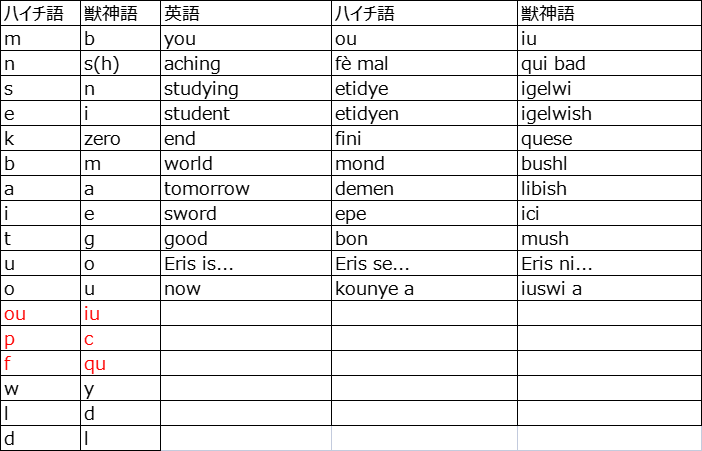
After a quick search on Google, it seems that people have figured out the technique used. It is really the same as Violet Evergarden (see my Tellsis translator here and the substitution here). The words are translated into a real world language that is not Japanese or English (too easy to figure out), then a substitution cipher is used to replace the alphabets. Names are not put through the substitution cipher. Finally, the output is presented in a unique font.

For the Human tongue in Mushoku Tensei, that real world language is Basque (although English is also used, such as the "magic book" that Rudeus first read as a kid). For the Demon-god tongue, it is Zulu (with some Swahili). For Beast-god tongue, it is Haitian. For the substitution cipher, vowels, if switched, are usually switched with vowels so that they can be read. Accented vowels may end up being replaced with composite vowels. Consonants are switched with consonants, and sometimes with a double consonant (like sh, ch). This person on Twitter, 双倉, has quite some pictures and such on the work done to decipher these three languages. Below is an example taken from Twitter.
Image

Looking forward to someone consolidating this eventually... I am a bit busy now with setting up that new (used) server now...

Update: You can see a table of the letters in Demon-god tongue here. (Video is in Mandarin, though.)

Update 24 July 2022: Found this post in Reddit with a nice table to show how the writing system related to our alphabet.


Thursday, November 18, 2021

Grown-up versus adult (translation tidbit)

The word 大人 can be translated as "grown-up" or "adult" in English. By itself, there isn't any real difference.

But while an adult video is a video for grown-ups, a video for grown-ups is not definitely an adult video.

Just a random tidbit I thought of sharing after seeing how some names of Japanese products just translated into English using "adult" when "grown-up" is more appropriately... especially if you don't want people to have the wrong ideas about what you are selling. 😅

Monday, November 15, 2021

Getting a used Dell Poweredge R320 server

I don't know if this was a good idea... but one of the reasons I extended the home network was because... I bought a used Dell Poweredge R320 server on Yahoo Auctions.

I have no experience with such servers. No experience with Xeon CPUs. No experience with RAID. And rack servers are known to be loud. Like, really loud. I don't even have a rack for such servers to keep them, and obviously, no temperature-controlled room except when I turn on the air conditioning for myself.
 
How can this even be a good idea?

Sigh... that impulsive click on "Bid"...

Anyway, this is what it is supposed to look like... I will know when it actually gets delivered in a few days' time.
【埼玉発】★【DELL】PowerEdge R320 Xeon E5-2430L@2.0Ghz/ 16GB RAM/ 2TB HDD (3-133)_画像1

Specs:
Intel Xeon E5-2430L (single)
16 GB RAM (single stick of DDR3 1333MHz)
2 TB HDD (used)
DVD-RW drive
PERC H310 Mini RAID controller

Extending the home network

I have an older wireless router lying around since I got a new one, but it is a waste to just leave it in the storeroom. So I dug it out, and tried using it to extend my wired network.

A quick note before the details on how I did that. First, I have my main desktop, laptop, and media server connected by LAN cable to my router. My TV, Amazon Fire TV Stick, and a Raspberry Pi 4 connected to my TV are all connected to the router via WiFi, though. This actually makes it harder to stream high bitrate media from my media server to the Fire TV Stick and Raspberry Pi 4, though.

So the idea is to use an old router, place it near my TV, and connect the devices there to this old router using LAN cables. The old router is then connected to my router using LAN cable. The old router will be configured as a bridge, with DHCP and other stuff disabled so that everything is handled by the main router.

For my old ASUS router, this is actually quite easy.

1. Power up the old router, then push down on the reset button for 10 seconds. This resets the router to factory settings.
2. Connect the old router to my laptop using LAN cable, then go to 192.168.1.1 which is the default address for the router. This should bring up the initial router settings page.
3. Choose manual setup.
4. Set an admin password.
5. Choose "Access Point (AP)" as the router mode. This should automatically disable a lot of stuff that is not needed.
6. Set router address as something easy to remember, like 192.168.x.2 (replace x with a suitable number that is used by the main router, which should be 192.168.x.1).
7. Save settings, then power off the old router.
8. Connect WAN port of old router to one of the LAN ports on the main router using a LAN cable. Then, power on the old router.
9. Connect additional devices to old router using LAN cable. You should be able to access the main router at 192.168.x.1, and the old router at 192.168.x.2 (or whatever you set the old router's IP as). A good practice is, on the main router, set it to assign 192.168.x.2 to the old router based on MAC address.

BTW, the Amazon Fire TV Stick does not have a LAN port, so you will need to find a powered LAN to USB connector, which plugs into the same USB Micro-B port that the port usually goes. Amazon actually sells such an adapter.
(affiliate link below)

😁

(After connecting my Fire TV Stick to a LAN cable, I still get some stutter when playing high bitrate videos. I guess it is a limitation of the CPU/GPU on the Fire TV Stick and not the network. Kodi, which I installed using this guide, seems to have slightly better performance than VLC. This is another guide which teaches how to add Samba shares to Kodi.)

Friday, November 05, 2021

Watched Sing a Bit of Harmony (アイの歌声を聴かせて)

One of the anime films that came out recently is Sing a Bit of Harmony (アイの歌声を聴かせて), which is about an artificial intelligence project in the form of a high school girl. I thought it would be thought-provoking in terms of AI-human coexistence, so I found time to go catch it soon after release.

And kind of regretted my decision less than halfway into the show.

(This post will contain spoilers. 😅)

The story starts with a futuristic setting in Japan, when technology and AI robots have become a part of our lives but they do not have human shapes. The AI high school girl, Ashimori Shion, was created by high school girl Amano Satomi's mother and her team, who work for a major tech company. They decided to send Shion to Satomi's school in an experiment to see if people will discover Shion is actually an AI robot. The concern is that this may infringe the AI ethics law of the time.

Personally, I wished they had elaborated more on the AI ethics law. The coexistence of AI and humans is a theme that I keep thinking about, and I had thought this movie would provide some new angle. Unfortunately, I was disappointed. The movie was more like an hour-long commercial for the songs by Shion (voiced by Tsuchiya Tao). Yes, Shion was portrayed as bringing happiness through song... but the way the movie was written, Shion is just an airhead who sang at the most inappropriate times. If you like cute anime girls with no IQ, then this is the movie for you. But if you are expecting more from paying money and spending time, I would suggest you skip this movie and watch something else. Even the new Sword Art Online movie, which I watched on the same day, was better than this one.

Why?

First, the story is too unbelievable. You have a 9-year-old genius who added text-to-speech capability to a tamagotchi-type toy? Which is all the more unbelievable because that would mean this genius did this task about 7 to 8 years before the story. When technology would be at a lower level of proliferation within society... and that AI in the tamagotchi toy back then was even smart enough to recognise the instruction of "make Satomi happy". You are talking about a sentient AI in a tamagotchi toy at a time when such technology has yet to become a part of our lives. It is just too far-fetched to be believable, which makes it hard for people to empathise with the story. And when you cannot empathise with the story, it is a lot less enjoyable.

Another part is the creepiness of the story. This sentient AI has basically been stalking Satomi for 7 to 8 years. It has been lurking around in her home security system, the school's security system, even garbage collection robots, observing Satomi as she went about life. The sentient AI is able to communicate with other computer systems and get them to do what the AI wants. Like erasing her shape from security camera footage. Wow. The ultimate stalker. Who is everywhere and leaves no trace... This is not amazing. It is plain creepy. If the producers wanted to make people afraid of AI, I think they have managed to put that point across.

I walked out of the theater thinking, "How I wish I can have that two hours of my life back." Well, at least watching SAO after that made the trip to the cinema not a total waste of time.
 
In the end, I don't even know what the producers of the movie wanted to say. What is their message? Other than, nice songs, please buy the soundtrack.

If you like singing AI, watch Vivy. It is a lot more thought-provoking, the story is better written, and the anime quality is much better too. I mean, it is a TV series, but the quality is much better than this movie.

Sunday, October 24, 2021

Watching Dune (2021 movie) at a IMAX theatre

After watching Dune on its opening day in Japan at a Dolby Cinema, I wanted to see what the IMAX experience is like, since it was being promoted as having been shot for IMAX.

I had high hopes and great expectations. But I must say, I am not really sure how this "shot for IMAX" thing works.

IMAX is supposed to have a larger (taller) screen than the usual ultrawide format of movies. This means that on an IMAX screen, ultrawide movies will end up with that black band at the top and bottom. And to me, this was the most distracting part about watching Dune in IMAX. The screen was switching between using the entire screen, then having black bands at the top and bottom. At first, I thought this was only for the very first part in Caladan, when scenes with people would be in ultrawide while the landscape in IMAX. But no, it seems there isn't any rule. You can have scenes with people in IMAX too. This constant switching in aspect ratio was so distracting, I wondered if they could have taken a bit more effort in the post-production to avoid such switching. Or just used the taller aspect ratio for the entire filming.

I didn't notice this switching of aspect ratio in the Dolby Cinema version, and personally, between the constant switching (which is distracting) and seeing less of the top and bottom of each scene, I would go with the latter.

Anyway, now that I have watched the film twice and in both formats, I shall try to find time to write down my thoughts about it. Soon.

Friday, October 22, 2021

Notes from Violet Evergarden the Movie's music staff audio commentary

This is the third audio commentary from the Blu-ray of Violet Evergarden the Movie. The first one which I listened to was the commentary by the production staff. There is another one by the voice actors. The one by the production staff was like an internal after-action review (AAR) while the one by the voice actors was more free-ranging. This one by the music staff covered a very niche area: the music production. It got a bit technical at times, but the second half did try to talk more specifically about the music for each scene.

This audio commentary involved sound director Tsuruoka Yota, composer Evan Call, and music producer Saito Shigeru. The following is a summary of the things that were mentioned in the audio commentary.
 
They started by talking about the roles of the sound director and music composer. Also the music for both the TV series and movies were composed by Evan, for the movie, Evan was in charge of film scoring too. Every piece of music was composed for that specific scene. In fact, he watched the movie (with the voice acting already added) as he went about writing the music pieces. This was unlike the TV series, when sound director Tsuruoka would specify the kind of music he wanted and then Evan went about fulfilling that order. Tsuruoka explained that this was because for the TV series, music written for a specific scene would be hard to reuse, so the music pieces were more "generic".
 
For example, Tsuruoka's instructions for the TV series music included:
1. Simply beautiful music that is out of this world
2. Simply beautiful music that encompasses everything in this world
Evan had to try and understand what he meant (it was in Japanese), and while there were issues with communication back in 2017, Tsuruoka was also glad because of the fresh perspective that Evan brought. For example, the use of typewriter sounds in the music pieces.

For the movie, Tsuruoka again only had broad instructions, like "here to here, this kind of music" kind of broad. It was then left to Evan to watch the animation and listen to the voice acting, then interpret each scene. The broad direction was that music was meant to add value to the scene. And both agreed that silence is golden, and the end of each piece (which is the start of silence) was very important. Music is there to help tell the story, not get in the way of the storytelling. For example, Evan choose to use different instruments to convey different feelings. For that scene when Violet was talking outside Gilbert's door, Evan chose to use the violin when Gilbert talks to express his guilt. For the final scene of Yuris, he decided to use the cello for Yuris. In scenes with lots of dialogue, he toned down the melody so that it doesn't get in the way of the story. They also talked about the importance of music being sad but not pitiful.

Evan recalled that he was told to redo the music pieces for only two scenes. The first was when Daisy visited CH Postal Company (which had become a museum). The instruction he had was "a new era". So at first, he came up with something more vibrant. This was because in the Gaiden movie, there was also a time shift and a more vibrant piece was used to signal that the times have changed. But Tsuruoka wanted something more nostalgic. There was a time shift, yes, but he wanted to express that the times are changing, with that bit of nostalgia. The second piece that was redone was the music when Hodgins knocked on Gilbert's door and met him after four years. Evan had originally came up with a more happy and joyous piece for this reunion between good friends. Tsuruoka, however, had in mind a piece that expressed surprise rather than joy or excitement.
 
Music was also used to represent characters. For example, Violet's theme was played at the final fireworks scene, when Hodgins looked to his left at an empty space. This made it clear that Violet was no longer at his side, without the need for any further explanation of any kind. Pieces from the TV series were also rearranged for use in flashback scenes in the movie. For example, "Never coming back" in the TV series was rearranged for use in the scene when Violet thought back about the final battle at Intense. The music for Episode 10 was also reused in the opening part about Ann's letters from her mother Clara.
 
Evan also talked about why he chose to record the music in Germany. He wanted music with more depth, and the recording hall in Germany was actually a scoring stage used primarily for recording music pieces for movies. The tall ceilings and curtains helped him to create pieces that provided the proper impact when enjoyed in theatres.

Finally, they talked about the challenge with having Gilbert's and Violet's reunion after Violet's final letter. Violet's final letter was the climax of the movie, but the reunion was another emotional high. The challenge was in how to find music for two such critical parts so close to each other. Tsuruoka said that the use of the word "michishirube (guiding light, signpost)" felt almost like an unspoken instruction from director Ishidate to use the song "Michishirube" here. It also helped that the song's lyrics, even though written for the TV series, was such a great fit for the movie. And by coincidence, the words tsubasa (wings) and tobu (which means fly, but also jump) appeared just as Violet was about to jump off the ship. This couldn't have been a better fit, so the music before "Michishirube" was written in a way to blend its key as it led to the song. And they recorded the piano part of "Michishirube" again, because the TV series version was more chirpy/bouncy but Tsuruoka wanted something more somber and gentle.
 
To Tsuruoka, Evan, and Saito, they felt that Violet was the storyteller who told us the stories of other people as she wrote letters for them. But through telling the stories of others, we are eventually told the story of Violet.

The audio commentary got quite technical at times. But it was really touching to hear them talk about how they went about making the music a part of the story, adding to it, enhancing it. So much so that, when you listen to the soundtrack, you can actually recall every scene.
 
Oh, Evan also talked about about his time at Berklee College of Music. He wanted to be a composer, but there was no such course, so he tried to enter via singing his own songs. He wrote his own songs to try to convey that he was interested in composing. He failed to get in on the first try, though. At Berklee, he specialised in film scoring. I guess that's why he did such a great job with the movie.
 
Also, I don't think many knows this, but music producer Saito actually wrote several blog articles about the music production for Violet Evergarden.

My overall thoughts on Violet Evergarden The Movie

Events:
 
Translations of short stories:
Gilbert Bougainvillea and the Fleeting Dream (unofficial translation of "ギルベルト・ブーゲンビリアと儚い夢")
The Starry Night and the Lonely Two (unofficial translation of 星降りの夜とさみしいふたり)
Diethard Bougainvillea's If (unofficial translation of ディートフリート・ブーゲンビリアIf) 
The Tailor and the Auto-Memories Doll (unofficial translation of 仕立て屋と自動手記人形)
Laura and the Auto-Memories Doll (unofficial translation of ローラと自動手記人形)
Flowers and the Auto-Memories Doll (unofficial translation of 花と自動手記人形)
 
Tellsis (Nunkish) translation:
Last line of Violet's final letter to Gilbert
 
Insights on the movie:
 
Audio commentary notes:
 
 
All posts related to Violet Evergarden.

Tuesday, October 19, 2021

Notes from Violet Evergarden the Movie's voice actor audio commentary

This is the second audio commentary from the Blu-ray of Violet Evergarden the Movie. The first one which I listened to was the commentary by the production staff. There is another one by the music staff too.

The voice actors featured in this audio commentary were:
Isihkawa Yui, who voiced Violet Evergarden
Namikawa Daisuke, who voiced Gilbert Bougainvillea
Koyasu Takehito, who voiced Claudia Hodgins
Kiuchi Hidenobu, who voiced Diethard Bougainvillea

The following is a summary of the things that were mentioned in the audio commentary.

Voice recording for the movie was carried out in January and February 2020 over a total of four days. The first day was for all scenes which did not feature Gilbert or Diethard. The second day was for the scenes which had the four voice actors (Ishikawa, Namikawa, Koyasu, and Kiuchi). The third day was for scenes with only Violet and Gilbert. And the fourth day was for scenes from Daisy's time. When the voice recording was done, the visuals were still in the works, although some scenes have already been coloured in.

Ishikawa mentioned that she saw the instructions from sound director Tsuruoka to composer Evan Call, saying that those instructions for the music were actually quite abstract. She also mentioned that the voice recording for the TV series started in summer 2017 and was completed by the end of the year, before the series was aired in 2018. She also said that when she and Director Ishidate visited Germany (I think it was for AnimagiC 2018), the production staff came along because they wanted to scout for locations for the Gaiden movie.

Koyasu revealed that he initially thought Violet was a robot, then an android, before it dawned on him in Episode 3 of the TV series that Violet was actually human. The term "Doll" and the mechanical arms coupled with the way Violet spoke gave him that initial impression. (Personal note: I also thought this was an anime about a robot girl...) The actors talked about the growth of Violet. From someone who would put down everything she is doing to go and be with Gilbert (during the TV series), to a person who has emotions and was willing to forgo seeing Gilbert because she needed to fulfill her promise to Yuris (in the movie). And the scene which showed Violet being so human, when she was worried about how to act when meeting Gilbert.

Koyasu, Namikawa, and Kiuchi mentioned that this series was the first time they worked with Kyoto Animation. (Ishikawa has previously worked on A Silent Voice.) And there wasn't any audition for their parts. The only audition held was for the part of Violet. The rest seemed to have been selected by sound director Tsuruoka. He was mentioned many many times during the audio commentary. I guess this shows how closely the sound director works with the voice actors.

Most of them believed Gilbert had died when they were recording the TV series. Even when told at the end of the TV series' recording that they will be doing a sequel, they still weren't sure if Gilbert was alive or whether it would be more flashback scenes. Koyasu was touched just by reading the script for the movie--he originally skipped through just to look at his parts, but ended up reading the entire script because the story was so touching.

Koyasu was also quite cheeky during the audio commentary. He even tried to do some new voiceovers. Like in the scene when Hodgins met Gilbert at the island's school. "Hello, is this Gilbert's home?" And Namikawa played along, saying "No, it isn't." Oh, Hodgins is the only one who calls Violet as "Violet-chan"; everyone else calls her "Violet" (although in the light novels, Benedict calls her "Vi").

The voice actors praised the way KyoAni delivered the movie. They saw a lot of synergy between the visuals and the voice acting, and found it really interesting how KyoAni managed to give a part to the telephone in a movie about letters. There were also other comments about camera angle and the fantastic backgrounds.

At the end of the movie, the voice actors were talking about the red ribbon at the Ekarte Island school's gate and outside the post office. Ishikawa also raised the idea that maybe the man at the post office is related to Gilbert by blood after the male voice actors were discussing whether he could be Gilbert (which he can't, because Gilbert would be 93 years old by then).
 
Some other episodes about the voice acting:
- Hodgins screaming "大バカヤロー" was not in the initial script; it was later added in by Director Ishidate.
- Sound director Tsuruoka told Ishikawa to "become the letter" when she was recording her final letter to Gilbert; it was supposed to be a narration without emotions.
- Originally, there was no plan to use the song "Michishirube" at the letter scene. But sound director Tsusuroka decided to use that song because the word "michishirube" appeared in the letter, and he said something like, "That's like telling me to use 'Michishirube'."
- Sound director Tsuruoka told Ishikawa and Namikawa to record the reunion scene together (mentioned during a previous event too) and told them he would not be using any music, so how the scene turns out will depend entirely on their acting. Talk about pressure... but they recorded that scene in a single take.
- During the voice recording for the scene when Yuris passed away, many voice actors went out of the studio because they couldn't hold back their tears.
 
I was actually hoping for more insights about the backstory, but it is nice to hear the voice actors talk about episodes from the recording. Now to find time for the music staff audio commentary...

My overall thoughts on Violet Evergarden The Movie

Events:
 
Translations of short stories:
Gilbert Bougainvillea and the Fleeting Dream (unofficial translation of "ギルベルト・ブーゲンビリアと儚い夢")
The Starry Night and the Lonely Two (unofficial translation of 星降りの夜とさみしいふたり)
Diethard Bougainvillea's If (unofficial translation of ディートフリート・ブーゲンビリアIf) 
The Tailor and the Auto-Memories Doll (unofficial translation of 仕立て屋と自動手記人形)
Laura and the Auto-Memories Doll (unofficial translation of ローラと自動手記人形)
Flowers and the Auto-Memories Doll (unofficial translation of 花と自動手記人形)
 
Tellsis (Nunkish) translation:
Last line of Violet's final letter to Gilbert
 
Insights on the movie:
 
Audio commentary notes:
 
 
All posts related to Violet Evergarden.

Monday, October 18, 2021

Notes from Violet Evergarden the Movie's production staff audio commentary


And realised that it comes with THREE audio commentaries. Not the usual one... a total of three, with one by the production staff, one by the voice actors, and one by the music staff. That's a total of 7 hours of audio commentary that I need to sit through (eventually). First, though, I thought I would listen to the one by the production staff.
 
This is a short summary of the things I noted down while listening to the audio commentary.

The production staff commentary featured seven persons: Director Ishidate, Ogawa (staging/presentation aka 演出), Kuroda (animation supervisor), Yamamoto (3D direction), Shinohara (background art), Funamoto (compositing), and Yoneda (colour supervisor). Due to the number of people, the commentary was broken into three parts, with Director Ishidate present for the entire session: part one featuring Ogawa and Kuroda, part two with Yamamoto and Shinohara, and part three with Funamoto and Yoneda.

In the first part, they talked about this movie being the first time Kyoto Animation worked on something that has an ultra-wide aspect ratio instead of the usual 16:9 ratio. A lot of thought was put into the pauses and silence, and Ishidate felt that he has more or less gotten the right amount of pauses/silence without dragging out the film too much. Another challenge he faced was with the timing for introducing Gilbert. This is because the film's main focus is Violet. He wanted to bring in Gilbert at a time which gave enough of a teaser for the rest of the film, but without letting his presence draw the spotlight away from Violet.

Ishidate also talked about the song 未来のひとへ (Mirai no hito e) which was played during the credit roll. This song was actually written for the vocal album of the TV series, but he found the song, especially a particular line, very fitting for this film. "目には見えないもの、見ようとする心" (which translates to "Things that cannot be seen with the eyes, and the heart that tries to see them") Even as things change in Violet's world, some things which cannot be seen continue to remain the same, and she continues to try to see those things and put them into letters for her clients.

Small tidbit shared by Ishidate during this part. He mentioned that he cried during the final pre-screening of the movie. He also mentioned that he was confident of pulling off this movie. With his background as an animator, he was like, "We will just draw it." Nothing is impossible.

During the second part, Shinohara mentioned that the focus of the background art was to provide first impressions using brightness and contrast. Yamamoto said that the 3D team did their best to blend the use of 3D and CGI with the hand-drawn art styles. As far as possible, if the viewer cannot discern that a scene was created in 3D instead of hand-drawn, that would mean they have succeeded. Violet's typewriter was also given a bit of wear and tear over the entire series to show Violet's own growth.

In the third part, Yoneda talked about how colours were chosen to blend with the background, so that the cells and the background are harmonised. She also mentioned the deliberate use of darkness, since electricity was still not very widespread in Violet's time. Also, they did not have a standard colour palette. Instead, colours were selected for every scene. This movie really tested her and she had to use every bit of knowledge and experience to pull it off, plus try out new things. Funamoto also talked about his similar experiences in the movie's production.

It was also in the third part that Ishidate mentioned that, in the TV series, Violet had to learn to live without Gilbert. She was the one bringing happiness and closure to other people. So he wanted this movie to bring happiness to Violet. And at the end of the movie, before the credit roll, there was a shot of Violet's back as she walked, and then the camera moved beyond. This was to say that we have been chasing after Violet, but it is time to move beyond. (I guess this is KyoAni's way of saying they are moving beyond Violet Evergarden as a series.) This scene was also produced because the animators, during the initial planning stage, drew up animations of how people wearing heels would walk. One for females, one for males. These animation drafts were meant to help future production staff when they worked on animating those who wear heels (like Violet and Benedict), but Ishidate decided to use it for the end of the movie to show the staff that he recognised their work.

I think there was a part of the audio commentary when Ishidate was weeping, but I can't be sure. He probably recalled his time working with the victims of the fire. Shinohara also made a brief mention of Watanabe Mikiko, the background art director. The staff's interaction with each other showed how close they are, and just thinking about this breaks my heart.

Okay, this is the short summary for the production staff audio commentary. I will need to find time to listen to the other two (voice actors and music staff) plus go through the audio commentaries for the TV series and Gaiden movie...

Note: They also talked about things like professionalism and attitude towards work, which I have mostly left out from this summary.

My overall thoughts on Violet Evergarden The Movie

Events:
 
Translations of short stories:
Gilbert Bougainvillea and the Fleeting Dream (unofficial translation of "ギルベルト・ブーゲンビリアと儚い夢")
The Starry Night and the Lonely Two (unofficial translation of 星降りの夜とさみしいふたり)
Diethard Bougainvillea's If (unofficial translation of ディートフリート・ブーゲンビリアIf) 
The Tailor and the Auto-Memories Doll (unofficial translation of 仕立て屋と自動手記人形)
Laura and the Auto-Memories Doll (unofficial translation of ローラと自動手記人形)
Flowers and the Auto-Memories Doll (unofficial translation of 花と自動手記人形)
 
Tellsis (Nunkish) translation:
Last line of Violet's final letter to Gilbert
 
Insights on the movie:
 
Audio commentary notes:
 
 
All posts related to Violet Evergarden.