Two slogans that can help define Japan's vision for the future.
「塙(はなわ)を目指せ」
「刃(は)」をつける:鋭い(精鋭の)軍事力・経済力を作る。
「名(な)」を得る:威信を高める。
「和(わ)」を守る:安定した国内・国際環境を作る。
「大和(やまと)魂」
やりがいのある経済、
まとまりのある内外政策、
ともに生きる。
Tuesday, July 12, 2011
Slogans for a new Japan

Sunday, July 10, 2011
Kumamoto Castle
On the way back from Okinawa, we had to make a short business stop at Kyushu, and I managed to find time to visit Kumamoto Castle.

For 10,000 yen, you can become one of the owners of the castle. So how would you like to own your own castle?
Saturday, July 09, 2011
Okinawa summer 2011
I went to Okinawa for work in the early part of July 2011, and had some time to roam around to do a bit of sightseeing. The summer in Okinawa is hot, but not as hot as Tokyo, and the nice breeze makes it a lot better than being in Tokyo.
First stop is International Street, Kokusai-dori 国際通り in Japanese. Here is the tourist part of town, with lots of shops selling gifts and Okinawan goods, and restaurants catering to tourists.

We had a chance to see some Okinawan music being performed as well.

The Cornerstone of Peace is built in memory of all those who perished in Okinawa during World War Two. The names of these people are engraved in the black stone tablets found in the park, while there is a separate building that houses exhibits related to World War Two and how Okinawa suffered during the war.

The Imperial Japanese military fought an attrition war from tunnels. The tunnels of the old navy headquarters are now opened to public.

A trip to Okinawa is not complete without a visit to Shuri Castle, where the Ryukyu court used to reside before Okinawa was annexed by Japan.

And did you know? Commodore Perry actually stopped by in Okinawa before he went to Japan.

Friday, July 08, 2011
Tanabata poem
Saturday, July 02, 2011
Shiohigari 潮干狩り
We went to a beach near Hakkei-jima 八景島, known as Umi-no-koen 海の公園 (translated roughly into "park by the sea").

And there, we joined in the large crowd that was gathered during the low tide to pick clams. This is known as shiohigari (潮干狩り) in Japanese. The smaller ones are known as asari in Japanese. The two large ones were found by me!

Kites, again, are common here. And here is a shot of a kite flying low over the beach.

The kids... they really enjoyed their day at the beach!

Identity awareness
It is quite interesting for me to realise how being away from Singapore and being amongst Japanese actually help me learn more about what being Singaporean is all about. By immersing myself in a foreign culture, I instead come to understand my own culture better than before. After all, when asked, "What do you think from a Singaporean point of view?", I have to come up with a logical answer that more or less represents what an average Singaporean would think. And that means I need to know Singapore culture/history/thinking better to provide the basis for logical thinking.
So being in Japan not only allows me to understand the Japanese better, it helps me understand what being Singaporean is all about.
So being in Japan not only allows me to understand the Japanese better, it helps me understand what being Singaporean is all about.
Thursday, June 23, 2011
Fedora 15 installed!

I finally installed Fedora 15, almost a month after it was released.
And immediately regretted it... the desktop is very much different from Fedora 14, because F15 uses GNOME 3 while F14 used GNOME 2. Now, the challenge is to see how I can get back as much of the look and feel of GNOME 2 with GNOME 3...
Maybe I will switch to using KDE instead...
Home of the Fedora Project
You can get the latest Fedora release here.
Fedora Project at Wikipedia
GNOME at Wikipedia
Friday, June 17, 2011
Afterthoughts from lecture by Sakurai Yoshiko
I had a chance to attend a lecture by Sakurai Yoshiko (櫻井よしこ), a famous journalist in Japan well-known for her views on politics. She talked about the rise of China and the need for Japan to be able to deal with this issue. She also talked about the problems with the current Japanese administration in the way they are dealing with the aftermath of the earthquake.
Her lecture was informative and passionate, and as an ex-newscaster (and her experience with mass media), she was good at delivering speeches. You can really feel the charisma and the persuasive power. But her lecture would have been better if her views were not so biased. A few points that I thought she could have improved on so that her lecture was not so biased.
She mentioned that China does not invent new technology. Instead, China gets her technology from elsewhere (hinting that some of it was stolen). But history has shown that China invented gunpowder (which changed the way war was conducted), silk (still in use today, and still a very much sought after commodity), Chinese characters (which Japan is using for her writing as well), the compass and the list goes on. China may not have invented much new technology in recent years, but I thought her statement was too sweeping.
She also mentioned that Japan has never lost a fight to China. But if you look at it this in another way, it was because they have only fought twice, and it was Japan who initiated the fights (when Japan fought the Qing dynasty in 1894 and the Sino-Japanse war in 1930s). It was the Mongols (not the Chinese) that tried to invade Japan in the 13th century. China has never been aggressive towards Japan in her 5000 years of history, even though for most of the 5000 years, China was superior in power to Japan. Yet the moment Japan gained the upper hand in power, Japan displayed aggressive intentions.
She goes on to say that the Japanese race and culture is impressive. Of course I agree with this. But I think we should also take a look at history. Japanese culture is impressive, but how much of it was borrowed? The Japanese culture borrowed heavily from Chinese culture, with Chinese characters for writing, chopsticks for eating, even kimono was styled after Chinese clothing. Without Chinese culture, rate of civilisation would have been much slower, and when Westerners arrived in the 16th century, she would have been colonised like the Americas and South-east Asia.
It is one thing to be persuasive, it is another thing to be narrow-minded. It is not just enough to see things from the viewpoints of different people. It is more important to see things from different viewpoints. Seeing the same thing from the eyes of 10 people who are all looking at the same thing with the same viewpoint does not mean one is objective. It only means one has found friends who share a common viewpoint. To see things in a better light, we need to find 10 friends who see things from angles different from each other. If everyone's hand is on the snout of the elephant, an elephant would be no different from a snake. Only by finding people who are touching the elephant at different places can we piece together what an elephant really looks like.
Tuesday, May 17, 2011
Golden Week 2011
This Golden Week, we managed to take a good break after all the work settling down.
It started with a visit to the nearby Shinagawa Aquarium, actually one day before Golden Week (GW) officially started.

The kid and his cousin were very excited at seeing all those fishes and marine mammals. They were running around from exhibit to exhibit, and were very drawn to the dolphin pool.

Next, we went to Karuizawa 軽井沢 with my sister-in-law and her family. It was the first time the two kids got to travel on the bullet train (aka Shinkansen 新幹線) and you can see how excited they were.

Once at Karuizawa, we went to the main reason of this trip: Toy Kingdom (おもちゃ王国)!


The kids got to sit on Thomas the Tank Engine. My son was sooooo excited, he pulled me back to get another ride.

And he got to play with Thomas again after that... we left him on his own for quite a while, he was lost in his own world with Thomas.

So you can imagine how tired he was after we got back to the hotel...


We took another trip to Nikko with my parents-in-law. There was a small river running through the hotel's compound.

From Nikko, we took a drive up to Ouchijuku 大内宿. On the way there, we enjoyed the scenery, with blooming sakura trees.

We also stopped at Tou no Hetsuri 塔のへつり, just before we reached Ouchijuku.

Ouchijuku is a small little hamlet used by samurai lords as a travel lodge in the past. The people here continue to maintain the old houses and it is a tourist spot now.


And the water flowing down from the mountains provide a way of keeping things cool... a natural refrigerator!

On the way back from Nikko, we stopped at Ashikaga Flower Park. The flowers were in full bloom.

There were many wisteria trees like this one...

And here's the son in his yukata!

It started with a visit to the nearby Shinagawa Aquarium, actually one day before Golden Week (GW) officially started.

The kid and his cousin were very excited at seeing all those fishes and marine mammals. They were running around from exhibit to exhibit, and were very drawn to the dolphin pool.
Next, we went to Karuizawa 軽井沢 with my sister-in-law and her family. It was the first time the two kids got to travel on the bullet train (aka Shinkansen 新幹線) and you can see how excited they were.
Once at Karuizawa, we went to the main reason of this trip: Toy Kingdom (おもちゃ王国)!
The kids got to sit on Thomas the Tank Engine. My son was sooooo excited, he pulled me back to get another ride.
And he got to play with Thomas again after that... we left him on his own for quite a while, he was lost in his own world with Thomas.
So you can imagine how tired he was after we got back to the hotel...

We took another trip to Nikko with my parents-in-law. There was a small river running through the hotel's compound.

From Nikko, we took a drive up to Ouchijuku 大内宿. On the way there, we enjoyed the scenery, with blooming sakura trees.
We also stopped at Tou no Hetsuri 塔のへつり, just before we reached Ouchijuku.
Ouchijuku is a small little hamlet used by samurai lords as a travel lodge in the past. The people here continue to maintain the old houses and it is a tourist spot now.
And the water flowing down from the mountains provide a way of keeping things cool... a natural refrigerator!
On the way back from Nikko, we stopped at Ashikaga Flower Park. The flowers were in full bloom.

There were many wisteria trees like this one...

And here's the son in his yukata!

Monday, May 02, 2011
Osama bin Laden is dead?
They say that Osama bin Laden is dead.
But does this mean the end of the war on terrorism? I don't think so, not by a mile. A war fueled by ideology is going to continue as long as the ideological principles it is based on continues to hold, and as long as people have differing views, terrorism will not end. So while some may celebrate the death of bin Laden, there is no real reason to bring out the champagne. And now that revenge is on the table, there is all the more cause for worry...
But does this mean the end of the war on terrorism? I don't think so, not by a mile. A war fueled by ideology is going to continue as long as the ideological principles it is based on continues to hold, and as long as people have differing views, terrorism will not end. So while some may celebrate the death of bin Laden, there is no real reason to bring out the champagne. And now that revenge is on the table, there is all the more cause for worry...
Thursday, April 14, 2011
Rule of 7
Today, I want to introduce to you the "rule of 7" as I was taught. This stemmed from the endless presentations that I have been seeing of late, with tons and tons of words that make you strain your eyes just to see them.
The "rule of 7" is very simple. If you need to present something, it should have no more than:
- 7 slides
- 7 points per slide
- 7 words per point
While it may not be possible to keep to the rule, what it is actually trying to say is, keep it simple, keep it concise.
The "rule of 7" is very simple. If you need to present something, it should have no more than:
- 7 slides
- 7 points per slide
- 7 words per point
While it may not be possible to keep to the rule, what it is actually trying to say is, keep it simple, keep it concise.
Saturday, April 09, 2011
Sakura in full bloom
The sakura (cherry blossom) trees started to bloom a few days ago... and then suddenly, they were in full bloom! It was a nice stroll along the river with sakura trees in full bloom lining the riverside.

But sad to say, they will drop off in a few days, to be replaced by green leaves... Like a quote, "Life is but a flower in the spring." Life is short, we should enjoy it while it lasts.
But sad to say, they will drop off in a few days, to be replaced by green leaves... Like a quote, "Life is but a flower in the spring." Life is short, we should enjoy it while it lasts.
Tuesday, April 05, 2011
Sakura blooming
It is the time of the year again, though a bit late this year. Sakura aka cherry blossoms have started blooming!

Second birthday
The baby is no longer a baby but a toddler, and he is two years old! How time flies...
First, a sumptous dinner prepared by the grandmother.

And which birthday is complete without a birthday cake?

Proud parents... :)

First, a sumptous dinner prepared by the grandmother.

And which birthday is complete without a birthday cake?
Proud parents... :)
Saturday, April 02, 2011
A new Japan
Just like how a phoenix is reborn from her own burning ashes, the recent disaster in Japan gives her a chance to be reborn. Since the economic bubble burst, Japan has been crawling along, without a definite direction. Now is the chance for Japan to start over again, to build up herself from her ashes towards a new Japan.

Will Japan ever be able to regain her status as the second largest economy in the world? I am afraid not, for she simply does not have the resources to do so. Coupled with a declining birth rate, Japan simply will not be able to regain that status. But that does not mean the end of Japan. Japan needs to find a new niche area for herself, a new role in the international community, economically, socially and politically. She needs to redefine her relations with other countries, especially rising countries like China and India.
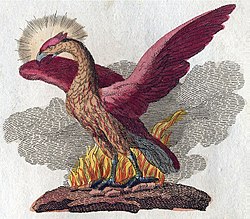
Will Japan ever be able to regain her status as the second largest economy in the world? I am afraid not, for she simply does not have the resources to do so. Coupled with a declining birth rate, Japan simply will not be able to regain that status. But that does not mean the end of Japan. Japan needs to find a new niche area for herself, a new role in the international community, economically, socially and politically. She needs to redefine her relations with other countries, especially rising countries like China and India.
Subscribe to:
Posts (Atom)